

Chewings Country
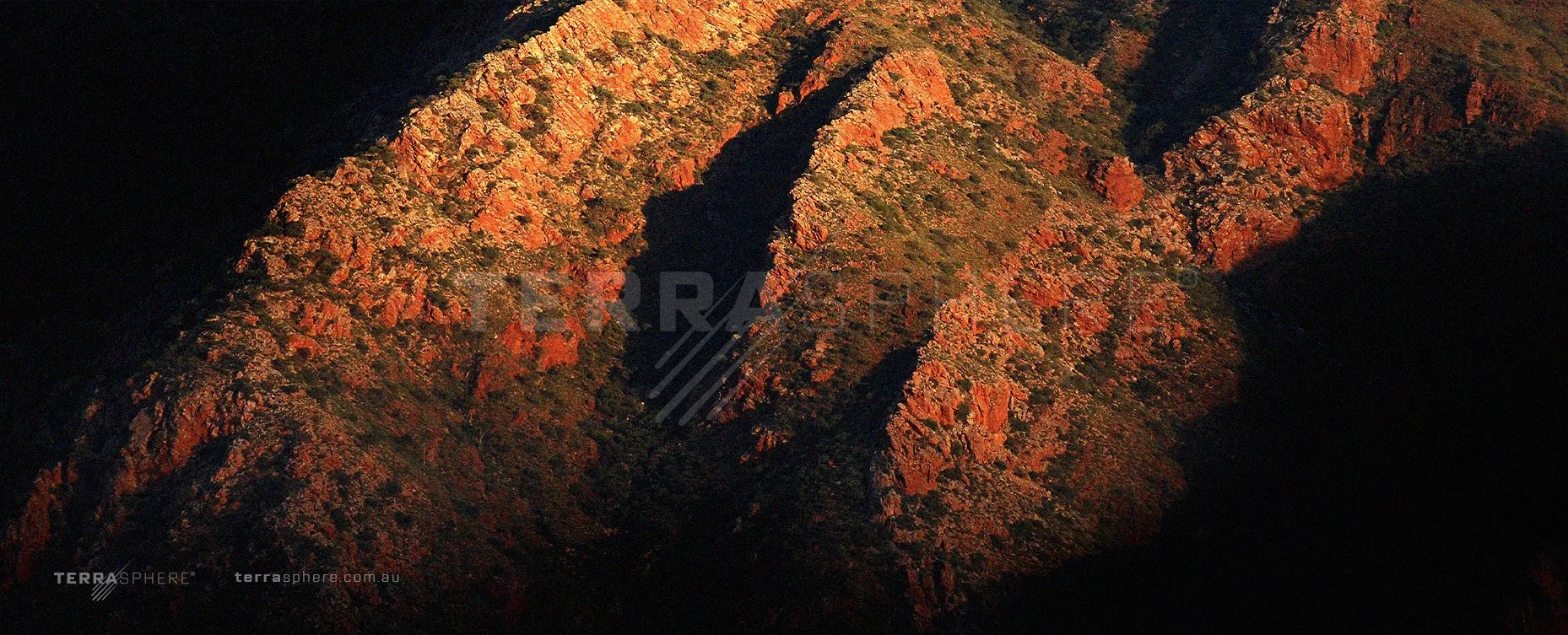
Tjoritja, Arrernte Country, Central AustraliaThe Chewings Ranges rise from some of the oldest country on Earth, their rock formed around 1.6 billion years ago — more than a billion years before the Himalayas began to rise. Weathered by immense spans of time, their quartzite ridges, fractured escarpments and deep shadowed valleys carry the scars of ancient mountain-building, uplift and erosion. This is a landscape stripped back to its bones: hard, remote, and enduring, where geology becomes texture, light and silence.
23°42′S, 133°10′E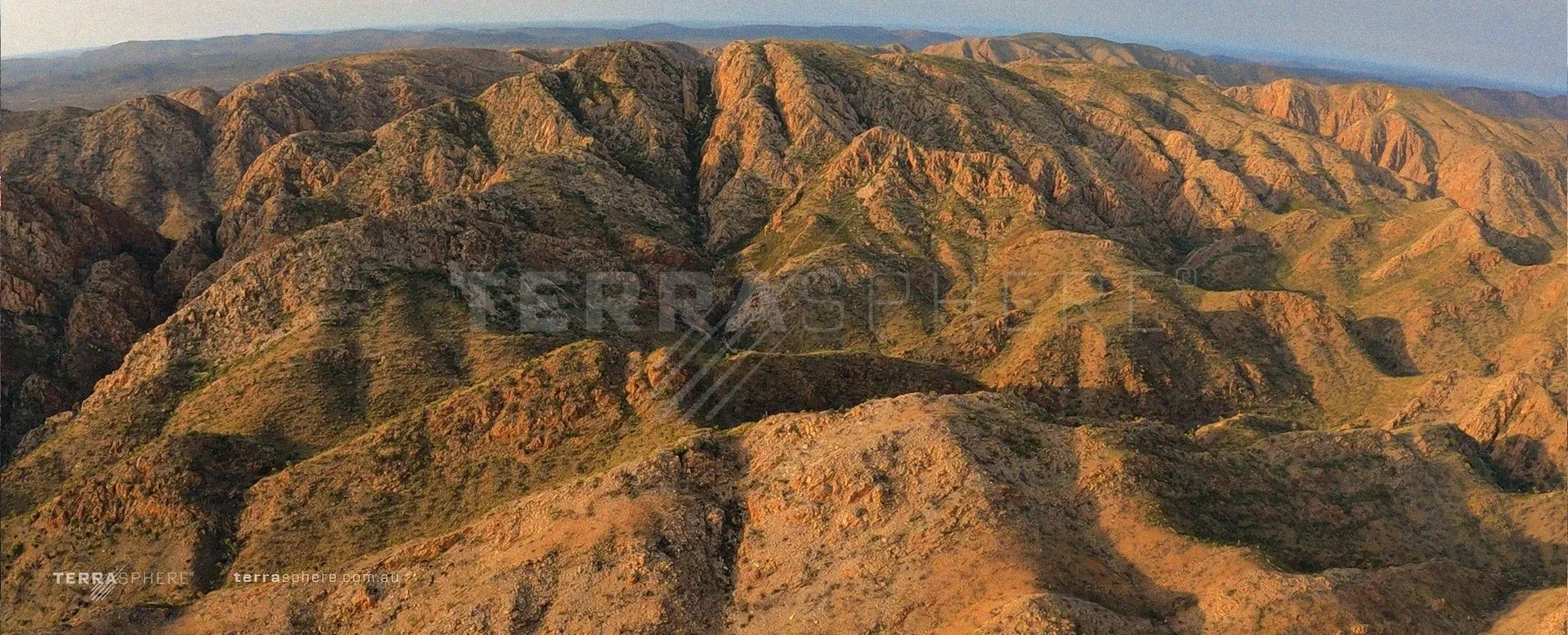
1.6 BILLION YEARS
The ancient geological foundations of the Chewings predate the rise of the Himalayas by more than a billion and a half years
The Larapinta Trail runs directly through the Chewings Range. More precisely, Section 3 crosses into Chewings country approaching Standley Chasm; Section 4 follows the high quartzite ridges of the Chewings Range; Section 5 continues through Spencer Gorge, Razorback Ridge, Linear Valley and Hugh Gorge; and Section 6 begins at Hugh Gorge before crossing the Alice Valley toward the Heavitree Range.
Sections 3, 4 and 5 together account for 46.4 km of the Larapinta Trail—some of its steepest and most rugged walking country. Sections 4 and 5 are both officially graded Grade 5 – Difficult.
Brinkley Bluff rises to 1,209 metres and is one of the defining high points of the Chewings Range on the Larapinta Trail. Section 4 climbs onto the range and follows its elevated quartzite spine to the summit.
Other prominent elevations in this country include Mount Conway at 1,135 m and Paisley Bluff at 1,189 m.
Mount Giles reaches 1,389 metres, making it the highest point identified within the Chewings Range botanical site. The range runs broadly east–west, with the NT's ecological assessment describing it as extending from the vicinity of Ormiston Pound toward Simpsons Gap.
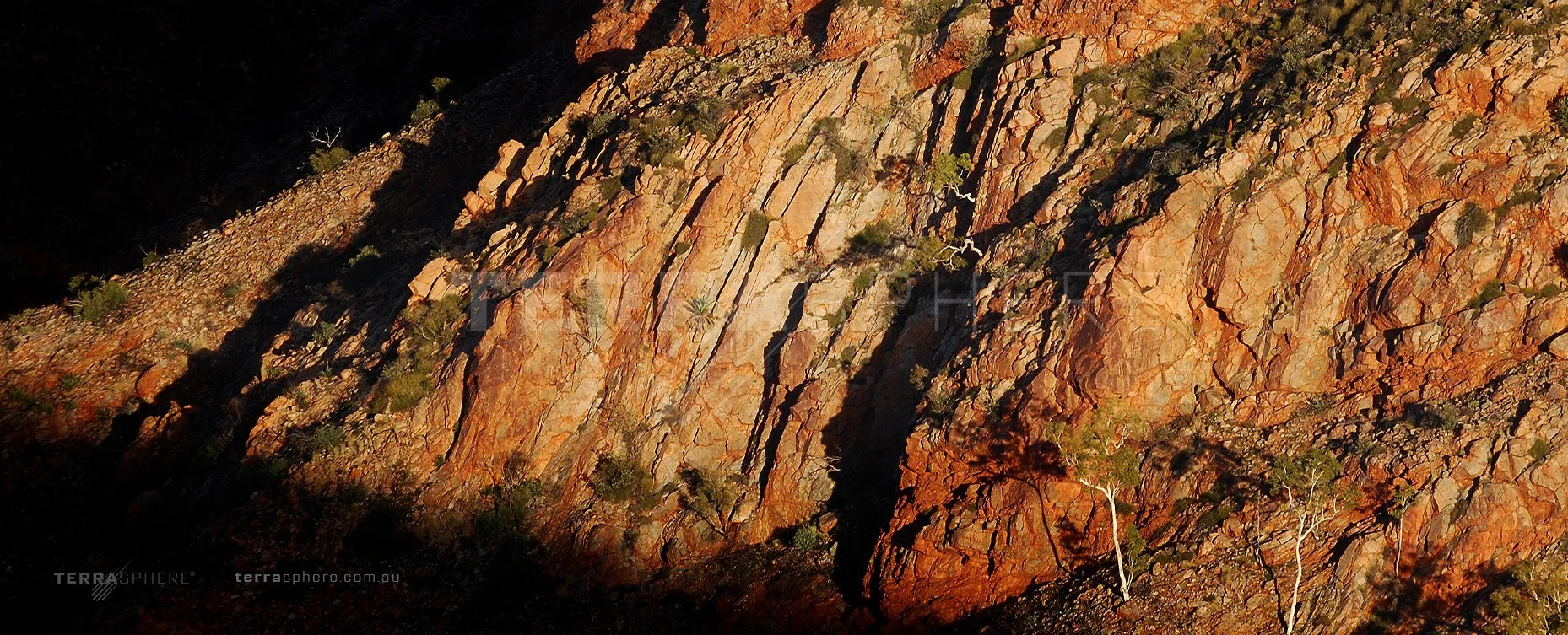
The distinctive ridges are associated with Chewings Range Quartzite, part of the ancient Iwupataka Metamorphic Complex. Geological dating from this complex places associated rocks at roughly 1.6 billion years old.
For perspective, the main Himalayan mountain-building event began only about 40–50 million years ago. So the ancient geological material exposed in the Chewings is more than 30 times older than the beginnings of the Himalayas.
There is an actual geological event called the Chewings Orogeny, associated with major metamorphism in Central Australia around 1.59–1.55 billion years ago.
The Chewings landscape is extremely resistant to erosion because of its quartz-rich rock. Government land-resource mapping describes parts of the range as exceptionally rugged, with very steep slopes, extensive exposed rock and little developed soil.
Water has cut much of the architecture we see today. Hugh Gorge, Spencer Gorge and numerous smaller drainage lines slice through the resistant range, exposing deep rock faces, narrow valleys and isolated waterholes.
Those sheltered gorges and permanent springs are more important ecologically than their arid surroundings might suggest. The NT identifies the broader Chewings Range as a site of national botanical significance, with rare plant communities concentrated around quartzite ranges, shaded gorges and permanent springs.
Some plants survive here as isolated relic populations from wetter periods in Central Australia's climatic past. The NT assessment specifically notes permanent springs in the Chewings Range supporting unusual ferns and other moisture-dependent species far removed from their main distributions.
Four plant species of national significance were identified as endemic to the Chewings Range botanical site in the NT's MacDonnell Ranges bioregional assessment.
Even the invertebrate life is unusual: an NT biodiversity assessment recorded a highly restricted native land snail at Spencer Gorge, with the species then known from only two isolated locations in the MacDonnell Ranges.
The range lies within the broader cultural landscape of Tjoritja. Traditional Owners describe Tjoritja as a living cultural landscape, with ancestral places, Law and responsibilities to Country continuing across the ranges.
The name Tjoritja was formally incorporated into the national park's name in 2014, recognising the original name for the country. The park is Aboriginal freehold land held by the Tyurretye Aboriginal Land Trust and jointly managed with Traditional Owners.
Against that depth of history, “Chewings” is an extremely recent name—derived from Charles Chewings and the period of European exploration and pastoral expansion in the late nineteenth century